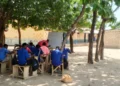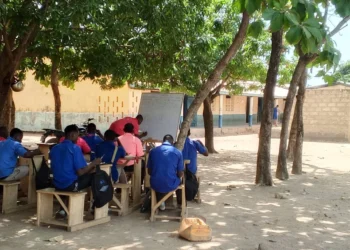



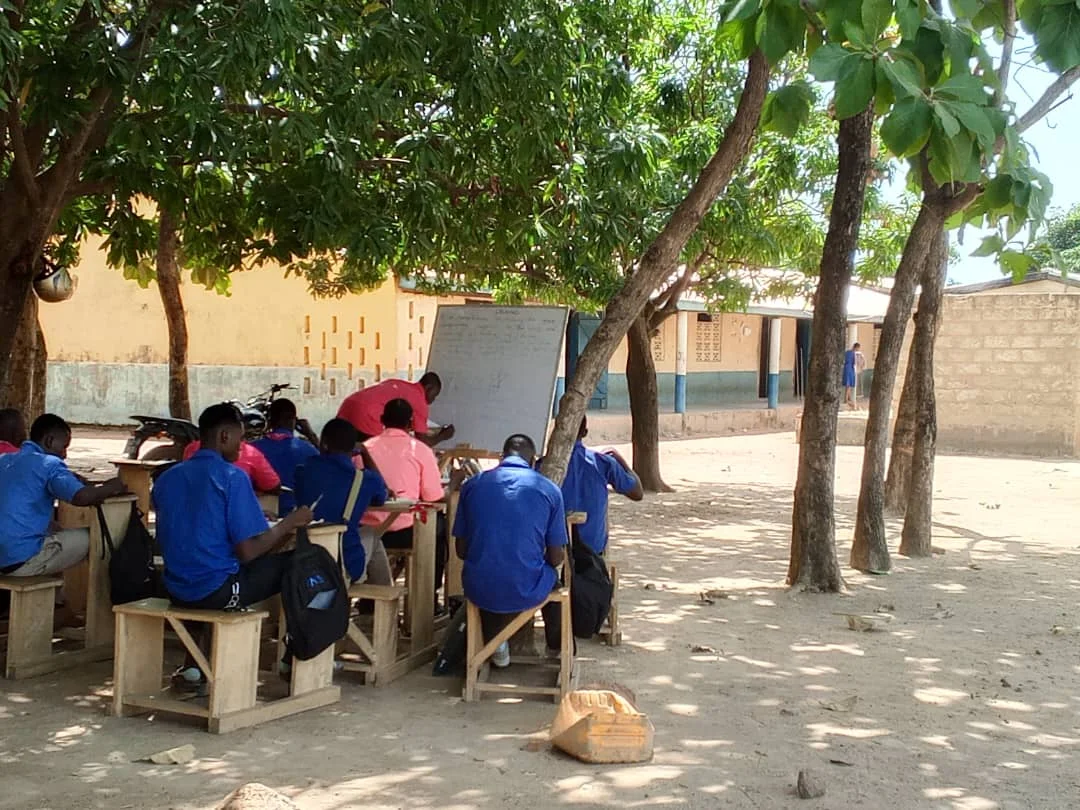
In the 21st century, when Ghana speaks of technical and vocational education as a catalyst for industrialisation, skills development, and youth employment, it is deeply troubling that students at Tibani Technical Institute in the Nadowli/Kaleo District must learn under trees. This is not merely an infrastructure deficit; it is a troubling indictment of our collective commitment to education, equal opportunity, and the future of our children.

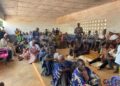
My visit to the school yesterday was an experience I cannot easily shake off. What confronted me was not simply a school in need of renovation but an institution struggling to fulfil its very purpose under conditions that should never be normalised. Regular classroom lessons and practical sewing sessions were being conducted beneath trees, exposed to the uncertainties of the weather. The school has only one small classroom block, whose deteriorating structural condition makes it grossly inadequate for the demands of modern teaching and learning.
It was an eyesore, and more importantly, a painful reminder of how easily the educational aspirations of children can be compromised by the failure to provide basic infrastructure. How can we demand excellence from students and instructors when we deny them the environment in which excellence can thrive?
Technical and vocational education and training (TVET) is not an ordinary classroom exercise. It requires appropriate workshops, practical equipment, suitable learning spaces, and a safe environment in which students can develop the competencies necessary for the world of work. When even regular lessons and practical sessions are held under trees, the question is no longer whether the school has challenges. The question is how long we intend to tolerate conditions that undermine its core mandate.
A TVET institution cannot be expected to produce technically competent, industry-ready graduates when the physical environment itself obstructs effective instruction and practical training. Neither the commitment of teachers nor the determination of students can indefinitely compensate for the absence of essential facilities.
What is not in dispute is that the appearance of a school can shape a child’s future. Imagine gaining admission to a technical school through the Computerised School Selection and Placement System (CSSPS), arriving with dreams of acquiring a practical skill, and discovering that the institution lacks the basic infrastructure you had reasonably expected. The disappointment could be profound.
Some students may question whether they made the right choice. Others may lose motivation, while some could seek opportunities elsewhere if circumstances permit. These are risks that deserve serious consideration, particularly when the institution is expected to attract and retain young people in technical and vocational education.
A school’s physical environment is not a superficial concern. It affects students’ morale, instructors’ effectiveness, practical learning, and the institution’s overall reputation. Where facilities are inadequate, the consequences can extend beyond the classroom to enrolment, retention, academic performance, and future career prospects. We must not allow children to conclude, by the circumstances imposed on them, that their ambitions are less deserving of investment than those of their counterparts elsewhere.
In the case of Tibani Technical Institute, the community has made its contribution. Where is the state? If the people of Tibani have made land available for this school, their contribution represents a meaningful investment in their community’s and surrounding settlements’ educational and developmental future. The government and the relevant education authorities must demonstrate a corresponding commitment by providing the infrastructure necessary for the institution to function effectively.
The school’s location has the potential to support educational access, skills acquisition, and local development. Yet that potential cannot be realised merely by establishing an institution on a piece of land and leaving it without the facilities required to operate properly.
I find it difficult to believe that the school authorities, management committee, Parent-Teacher Association, and community leaders have not made efforts to draw attention to these challenges. I sincerely hope that the appropriate authorities have received formal representations and that such appeals have not been allowed to gather dust in offices.
However, where efforts have been made without a visible response, the time has come for renewed engagement, greater urgency, and concrete commitments. The relevant authorities must move beyond receiving petitions and assurances to delivering measurable improvements.
The people of Tibani should not have to wait for a presidential visit before their concerns attract the attention they deserve. If such a visit would help expose the school’s plight and accelerate the provision of infrastructure, I would welcome it. But the provision of decent educational facilities should be a matter of routine public responsibility, not a reward for attracting the attention of the highest office in the land. Strikingly, a school should not have to wait for a presidential convoy before its children can learn in a proper classroom.
In fact, teachers and students deserve better, in all respects. What impressed me most was the determination of the teachers and students to continue teaching and learning despite the conditions confronting them. Their perseverance is commendable, but it should not become an excuse for institutional neglect.
We must be careful not to romanticise hardship. Teachers should not have to demonstrate extraordinary resilience merely to perform their ordinary professional duties, and students should not have to endure avoidable discomfort to acquire the education and skills necessary for their future.
The teachers at Tibani Technical School deserve an environment that enables them to deliver effective instruction. The students deserve classrooms and practical facilities that support their training. Both deserve the dignity that comes with being provided the essential tools to perform their respective roles.
In view of the difficult conditions under which these educators work, I also believe their circumstances warrant serious consideration in discussions about the proposed Deprived Area Allowance. If the government’s proposed 20% allowance is implemented, teachers serving in genuinely deprived communities such as Tibani should receive fair consideration in accordance with the applicable policy criteria.
Indeed, I would advocate for a 100% allowance for educators working under such exceptionally difficult conditions, should the government consider a more substantial incentive for the most disadvantaged postings.
Nevertheless, no allowance, however generous, should substitute for the classrooms, workshops, equipment, and other facilities that the school urgently requires. Financial incentives may help recognise the sacrifice of teachers, but infrastructure is indispensable to the delivery of quality education.
To me, this is a collective responsibility and not solely for the indigenes of Tibani. It would be a mistake to treat the plight of Tibani Technical School as the concern of the school authorities and the immediate community alone. The children attending the institution are not exclusively from Tibani. They come from different backgrounds and communities, united by their desire to acquire an education and build better futures. They are our children, and their educational prospects matter to all of us.
The district assembly must make the school’s infrastructure needs a priority in its development planning. The Member of Parliament for Nadowli/Kaleo must help mobilise the necessary political and institutional attention. The District and Regional Education Directorates must assess the school’s condition and pursue an appropriate intervention. The Ministry of Education and the relevant agencies responsible for TVET must ensure that the institution receives the facilities necessary to fulfil its mandate.
I also appeal to the Rt. Hon. Speaker of Parliament to lend his voice to this cause, alongside other influential public figures, corporate organisations, non-governmental organisations, philanthropists, and generous sons and daughters of Tibani and the Nadowli/Kaleo District.
Those with the resources to help should consider supporting the provision of classrooms, practical workshops, learning equipment, and other essential facilities. Such assistance, properly coordinated with the relevant authorities, could make a lasting difference in the lives of students and teachers.
The immediate priority, however, must be a credible assessment of the school’s infrastructure deficit, followed by a clear plan, defined responsibilities, adequate funding, and a realistic timeline for improvement. The people of Tibani deserve more than sympathetic words; they deserve action they can see and measure.
Obviously, it is incumbent upon us to rescue the future before it is compromised. The condition of Tibani Technical School should trouble anyone who believes that education is the foundation of national development. It should concern parents who entrust their children to public institutions, teachers who work tirelessly to impart knowledge, policymakers who promise educational transformation, and citizens who expect public resources to translate into meaningful opportunities.
We cannot continue to celebrate technical and vocational education in policy documents and public speeches while students are compelled to learn under trees. We cannot proclaim a commitment to skills development while the institutions entrusted with that responsibility lack the basic facilities needed to deliver it.
The children of Tibani and the surrounding communities are not asking for special treatment. They are asking, through the circumstances in which they learn, for the same opportunity to receive a decent education that other children deserve.
Let this appeal reach the district assembly, the Member of Parliament, the education authorities, the government, development partners, philanthropists, and every well-meaning Ghanaian who can help.
Tibani Technical School must not be left to teach under trees while the nation talks about building a skilled and competitive workforce. Its students deserve classrooms. Its trainees deserve workshops. Its teachers deserve a dignified working environment. And its community deserves an educational institution capable of delivering on its promise.
The time to act is now — not when another generation has lost opportunities that proper infrastructure could have helped secure.
Source: By Kala David – The Trial News