


St. Theresa Catholic Hospital in Nandom has recorded significant improvements in healthcare delivery during the first half of 2026, highlighted by zero maternal deaths, increased outpatient attendance, improved laboratory services, and a decline in institutional mortality.

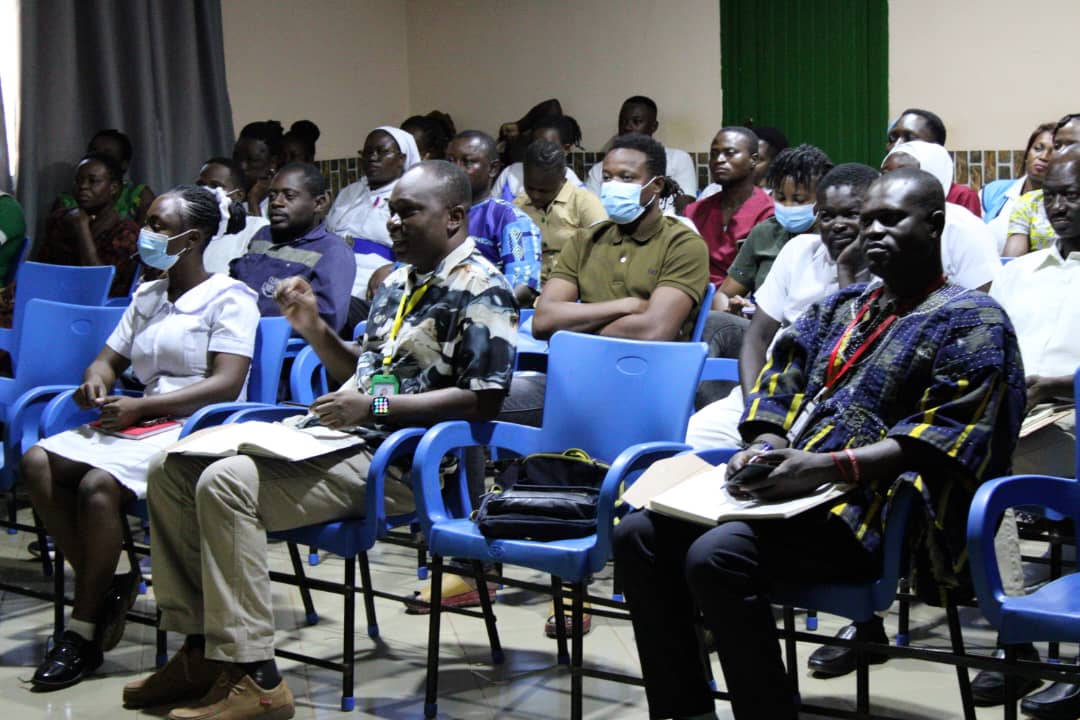
The achievements were presented during the hospital’s Half-Year Performance Review held on Wednesday, July 22, 2026, where management assessed performance across all service delivery units.
Speaking to the media after the review, the Acting Medical Superintendent, Dr. Mark Padmore Awudi, said the hospital had witnessed notable improvements from the Outpatient Department (OPD) to public health and inpatient care.
According to the performance report, total OPD attendance increased by 14.15%, rising from 27,188 in the first half of 2025 to 31,037 in the same period of 2026. The hospital also recorded a 96.06% increase in new OPD attendance, from 3,887 to 7,621, reflecting growing public confidence, improved referral systems, increased access to healthcare services, and stronger community outreach and health promotion activities.
Dr. Awudi explained that although OPD attendance had increased significantly, unnecessary admissions had reduced because more qualified clinicians are now available to manage patients at the outpatient level, ensuring that only those requiring admission are hospitalized.
The report further showed that 95% of OPD clients were covered by the National Health Insurance Scheme (NHIS), while only 5% were uninsured, demonstrating strong NHIS enrolment and improved access to affordable healthcare.
The hospital also maintained half year zero maternal deaths for the second consecutive year, one of its most significant achievements. Maternity admissions increased during the review period, while deliveries rose by 10.52% compared with the same period in 2025.
On inpatient care, admissions increased from 3,964 in 2025 to 4,126 in 2026, representing a 4.09% increase. Despite managing more admissions, institutional deaths declined from 95 to 92, reducing the institutional mortality rate from 2.40% to 2.23%. Hospital management attributed the improvement to better clinical management, early diagnosis, enhanced patient monitoring, improved emergency response and higher-quality inpatient care.
Dr. Awudi, however, expressed concern over the increasing burden of road traffic accidents on the hospital’s emergency services. Hospital data showed that road traffic accidents (RTAs) accounted for 28.4% of all emergency admissions, making them the leading cause of emergency cases during the review period. He noted that many of the victims suffered head injuries and fractures, placing enormous pressure on the hospital’s emergency unit.
Other leading causes of emergency admissions were bronchopneumonia, hypertension and cerebrovascular accidents.
Although the hospital has clinicians with the expertise to manage many of these cases, Dr. Awudi said the lack of some critical equipment and logistics often necessitates referrals to higher-level facilities, especially for patients with severe traumatic injuries.
The Acting Medical Superintendent also announced that the hospital has strengthened its laboratory services through the installation of new diagnostic equipment, enabling patients to access more laboratory investigations within the hospital instead of seeking such services elsewhere.
Despite the encouraging performance, the hospital continues to face significant equipment challenges, particularly at its Neonatal Intensive Care Unit (NICU). According to hospital management, two and sometimes three newborn babies have to share a single phototherapy unit, limiting the hospital’s ability to provide optimal care for babies with neonatal jaundice.
Management said acquiring a Firefly phototherapy machine would significantly improve neonatal care, reduce pressure on the NICU and help save the lives of newborn babies requiring phototherapy treatment.
Looking ahead, the hospital plans to sustain community outreach programmes to further increase OPD attendance, intensify NHIS registration and renewal campaigns, strengthen emergency response systems, continue maternal and perinatal death surveillance, conduct routine clinical audits and closely monitor key performance indicators to sustain the gains made in the first half of the year.
The hospital concluded that its strong mid-year performance reflects sustained improvements in the quality of healthcare delivery and expressed optimism that continued investment in equipment, staff development and quality improvement initiatives will enable it to meet its annual targets while providing better healthcare services to residents of Nandom and neighbouring communities.