


The Nandom market in the Upper West Region witnessed heightened activity as Muslims and livestock traders gathered in large numbers ahead of the upcoming Eid-ul-Adha celebration.

Nandom Market
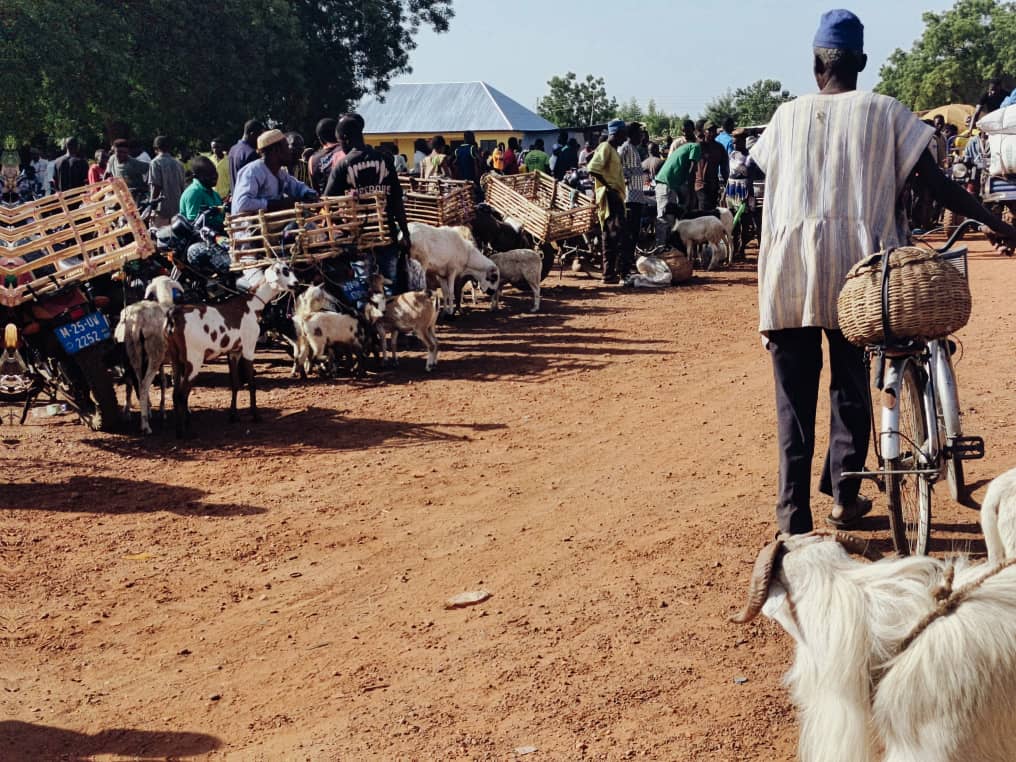
The animal section of the market was particularly busy, with traders and buyers negotiating prices for rams, goats and sheep to be used for the Islamic festival of sacrifice. Some traders travelled from neighbouring Burkina Faso, while others came from nearby districts and municipalities including Lambussie and Lawra.
Many prospective buyers moved from one corner of the market to another inspecting animals and bargaining with sellers. Motorbikes, tricycles and bicycles loaded with animals were a common sight as traders attempted to meet the growing demand.
Prices of rams varied depending on the size, health and breed of the animal. At the market, some rams were sold for as low as GHC1,000 while larger and healthier ones fetched as much as GHC5,000.
Eid-ul-Adha, also known as the Festival of Sacrifice, is one of the most important celebrations in Islam. The festival commemorates the willingness of Prophet Ibrahim (Abraham) to sacrifice his son in obedience to Allah before God provided a ram as a substitute.
According to Islamic teachings and the Holy Quran, animals permitted for sacrifice include sheep, goats, cows and camels. The animals are expected to be healthy and free from defects. Muslims who can afford it are encouraged to sacrifice an animal and share the meat with family members, neighbours and the poor.
Speaking to some traders at the market, many expressed optimism about good sales despite concerns over the rising cost of livestock transportation and feed.
Others, however, indicated that the current economic situation has made it difficult for some families to afford bigger animals this year.
Nonetheless, the atmosphere at the market reflected the importance of the celebration as Muslims prepare spiritually and materially for Eid-ul-Adha.