


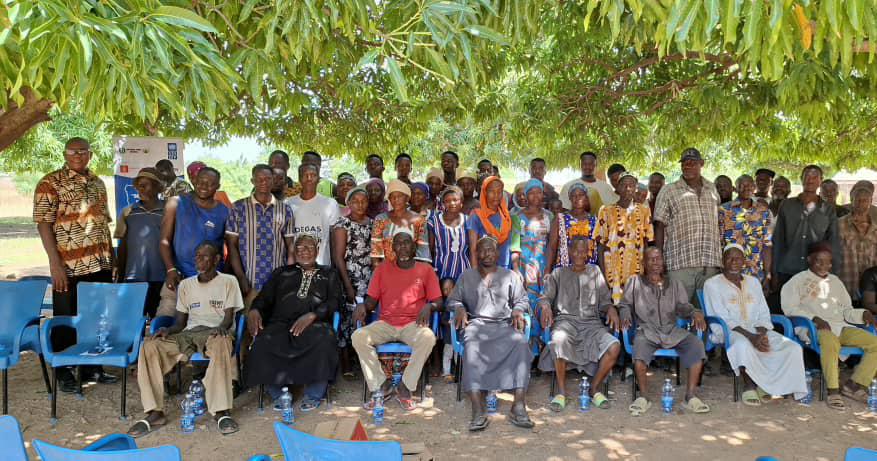
The Upper West Regional Peace Council (UWRPC) has intensified efforts to promote peaceful coexistence by engaging residents of the Kupulima and Puzene communities in the Sissala West District on the dangers of hate speech, harmful information, and the need to promote positive narratives within their communities.

The community engagements formed part of activities under the Atlantic Corridor Project and were organised by the UWRPC with funding support from the Governments of Norway and Denmark through the United Nations Development Programme (UNDP).
Held on the theme, “Promoting Peaceful Coexistence: Countering Hate Speech and Building Positive Narratives,” the outreach brought together chiefs, traditional and religious leaders, women and youth groups and other community stakeholders to deliberate on practical ways of strengthening peace, tolerance, and responsible communication.
Speaking during the engagement, the Chairman of the UWRPC, Venerable Dr. Moses Banungwiiri, explained that hate speech and harmful narratives often stem from ethnic intolerance, religious discrimination, political rivalry, unemployment, and the use of inflammatory language.
He stressed that dialogue, mediation, tolerance, and sustained community engagement remained essential tools for preventing conflict and fostering peaceful coexistence among diverse groups.
The Executive Secretary of the UWRPC, Clifford Tampuori, also educated participants on misinformation, disinformation, and mal-information, highlighting their negative implications for peace and security.
He reminded participants that although Ghana’s 1992 Constitution guarantees freedom of expression, individuals remain accountable for statements or publications capable of undermining public peace, security, and the rights of others.
Mr. Tampuori urged community members to verify information before sharing it, especially on social media platforms, and encouraged them to actively support peacebuilding efforts within their communities.
As part of the engagement, participants took part in role-plays and practical exercises designed to help them transform inflammatory statements into peaceful and constructive messages. They also developed community action commitments aimed at promoting unity, tolerance, and responsible communication.
Sharing his experience during the programme, a 27-year-old youth leader from Kupulima admitted that he previously shared unverified information that portrayed certain groups negatively.
“Whenever rumours spread, many of us reacted emotionally without checking the facts. This created fear and anger among the youth,” he stated.
He noted that the engagement had helped him better appreciate the consequences of spreading false information and pledged to become an advocate for peace and dialogue among his peers.
The chiefs and opinion leaders from the participating communities commended the UWRPC and its development partners for the timely intervention and advised residents, particularly the youth, to refrain from using derogatory language against minority groups, including the Fulbe community.
The UWRPC reaffirmed its commitment to strengthening community resilience against hate speech and harmful information as part of broader efforts to sustain peace and social cohesion in the Upper West Region.
Story By: Pontianus Aabe-inir