


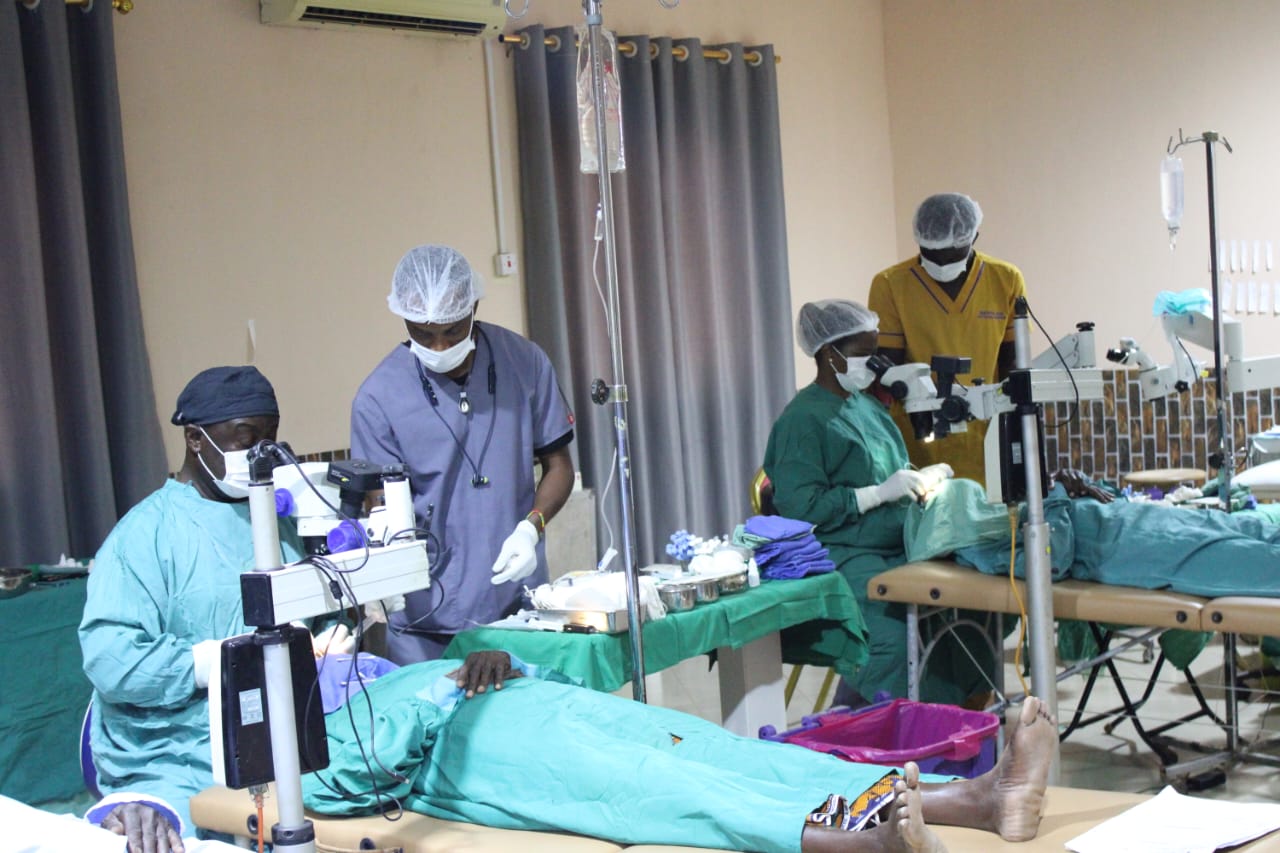
A total of 188 eyes suffering from cataract-related blindness have regained their sight following a three-day surgical outreach organized at St. Theresa Catholic Hospital.

The outreach was conducted with logistical support from the Cure Blindness Project and carried out by an ophthalmic surgical team led by Dr. Seth Wanye of Friends Eye Center.
The exercise forms part of ongoing efforts by the hospital to reduce avoidable blindness and improve access to quality eye care services for people living in rural communities.
Over the years, St. Theresa Catholic Hospital has become one of the leading eye care centres in the region in terms of cataract surgical rate. In 2025 alone, the hospital performed more than 500 cataract surgeries, restoring sight and independence to hundreds of patients.
Due to the growing demand for eye care services, the hospital’s eye clinic now serves patients from Nandom Municipality, neighbouring districts and even communities in Burkina Faso.
According to the World Health Organization and the International Agency for the Prevention of Blindness, more than one billion people worldwide live with preventable or treatable vision impairment, with cataract remaining the leading cause of blindness globally.
The burden is particularly high in low-resource rural communities where access to surgical care is limited.
Speaking to Yiri News, Martin Gangmur, the Deputy Chief Nursing Officer in charge of Ophthalmology at St. Theresa Catholic Hospital, said the outreach programme demonstrates the hospital’s commitment to tackling avoidable blindness in the municipality and beyond.
He explained that although the hospital continues to record significant success in restoring sight through cataract surgeries, the eye clinic still faces major infrastructure and logistical challenges.
Mr. Gangmur noted that many of the high-volume cataract surgeries are currently conducted in makeshift theatre spaces, which limits efficiency and reduces the number of procedures that can be safely carried out during surgical campaigns.
He therefore appealed to government, corporate institutions, philanthropic organisations and benevolent individuals to support the hospital to expand the eye clinic infrastructure by establishing a dedicated ophthalmic operating theatre.
He also called for support to acquire modern ophthalmic equipment such as slit lamps, visual field machines, an i-care tonometer for early glaucoma detection and an ophthalmic surgical microscope to improve diagnostic accuracy and surgical precision.
Additionally, the hospital is seeking assistance to procure an outreach vehicle to enable the eye care team extend services to remote and underserved communities across the Upper West Region.
Health officials say improved infrastructure and equipment will help the hospital increase the number of sight-restoring surgeries performed annually, reduce waiting time for patients and expand eye care services to more communities affected by preventable blindness.
They emphasize that every cataract surgery performed does more than restore sight—it restores livelihoods, strengthens families and renews hope within entire communities.