


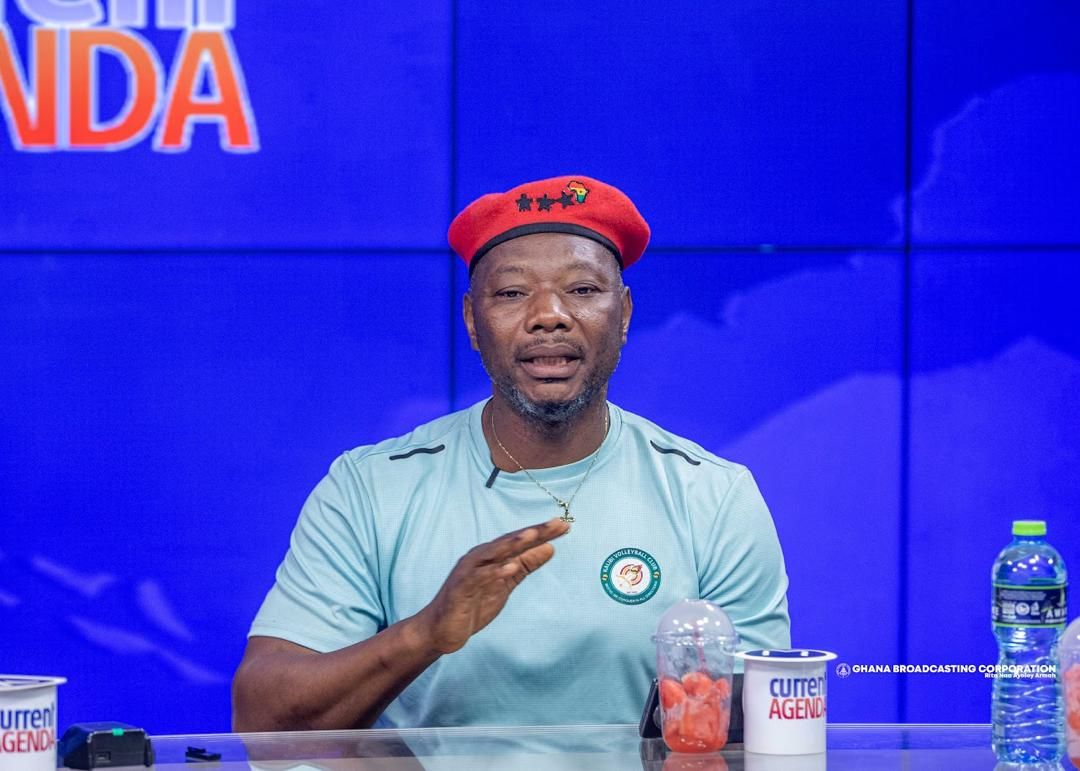
Bernard Anbataayela Mornah, leader of the People’s National Convention (PNC), has thrown his weight behind the government’s ambitious Big Push Agenda for road infrastructure, calling the projects “critical for nation building.”

He stressed that any wrongdoing must attract “commensurate punishment,” wading into the heated debate over sole-sourced contracts. Mornah’s intervention comes as the John Mahama-led administration pushes a $10 billion initiative to tackle Ghana’s crippling infrastructure deficit, from urban centers to remote communities.
The agenda has sparked controversy, particularly over the use of sole sourcing under the Public Procurement Act—a legal tool critics argue risks abuse despite its role in speeding up urgent projects. In his statement, Mornah acknowledged the national emergency: “Ghana stands at a critical crossroads. The question before us is not whether we need roads? we all know we do, but whether we have the courage, urgency, and clarity of purpose to deliver them.”
He defended sole sourcing as a “legitimate tool” for efficiency when competitive tendering causes delays, but warned against letting procedure “suffocate progress.”
“The Big Push Agenda is not merely another policy initiative. It is a bold declaration of intent,” Mornah wrote, highlighting demands from chiefs, farmers, traders, and workers.
He dismissed simplistic criticisms—like dividing total costs by road kilometers—as “intellectual laziness,” urging consideration of terrain, soil, and road types.
Yet, Mornah drew a firm line on accountability. “Do the risks exist? Absolutely. Sole sourcing can open the door to abuse if left unchecked,” he noted, calling out the Fourth Estate and NPP Minority for lacking “concrete, verifiable evidence” of conflicts of interest or inflated contracts. “Allegations are not evidence. Suspicion is not proof,” he added, while praising journalism’s role if exercised with “integrity, depth, and respect for facts.
”He called for balance: “Accountability must not become an obstacle to development, just as urgency must not become an excuse for impropriety.”
Every delay, he argued, costs ordinary Ghanaians—farmers unable to transport produce, traders losing income, workers enduring bad roads. “Ghanaians are not interested in noise. They are interested in results,” Mornah concluded. “If there is wrongdoing, let it be proven with evidence. If there is none, let the work continue. Ghana cannot wait.”
The post has ignited online reactions, with supporters hailing Mornah’s pragmatism and detractors questioning sole sourcing transparency. The Ministry of Roads and Highways has not yet responded, but the debate underscores tensions between speed and scrutiny in Ghana’s infrastructure drive.
Mornah’s stance positions the PNC as a voice for measured progress, amid ongoing probes by the Fourth Estate into Big Push contracts.